
Azure Migration Enables 3x Traffic Growth for D2C E-commerce Startup

3x traffic growth handled with zero downtime — auto-scaling absorbs traffic spikes. We delivered this outcome for Direct-to-Consumer E-commerce Startup (15 users) by combining Azure, Azure Front Door, Azure SQL Database into a single strategic engagement.
What Direct-to-Consumer E-commerce Startup was facing
A fast-growing direct-to-consumer e-commerce startup was running their Shopify Plus store, custom inventory management system, and customer database on a single on-premises server. During a Black Friday sale, traffic spiked 400% and the server crashed, costing them £45,000 in lost sales over 4 hours. Their previous IT provider had quoted £60,000 for a new server that would still be a single point of failure. They needed a scalable, cloud-based infrastructure that could handle traffic spikes, grow with the business, and stay within a startup budget.
How we solved it
We designed and implemented a complete Azure cloud architecture for the e-commerce platform. We migrated their custom inventory management system to Azure App Service with auto-scaling, deployed Azure SQL Database for their customer database with geo-replication, implemented Azure Front Door CDN for global traffic distribution, and configured Azure Cache for Redis to handle session state during traffic spikes. We implemented Azure Firewall, Web Application Firewall, and DDoS protection. We also deployed Microsoft Intune for device management and Microsoft 365 for team collaboration.
What we delivered
Black Friday: The Crash That Cost £45,000
A direct-to-consumer e-commerce startup was running their Shopify Plus store, a custom inventory management system, and a customer database on a single on-premises server in their London office. The server was a Dell PowerEdge R640 with 64 GB of RAM and 4 TB of storage — adequate for normal traffic, but completely inadequate for the traffic spikes that came with product launches and seasonal sales.
On Black Friday, traffic spiked 400% as a social media influencer promoted the brand. The server's CPU hit 100%, the database locked up, and the entire e-commerce platform went down at 10:14 AM — the peak of the sale. The startup's team frantically rebooted the server, but it crashed again within minutes as traffic continued to pour in. The outage lasted 4 hours, during which the startup estimates they lost £45,000 in sales — and significantly more in customer goodwill, as thousands of shoppers saw error pages instead of products.
The startup's CTO called us the following Monday. Their previous IT provider had quoted £60,000 for a new, more powerful server — but it would still be a single point of failure, and there was no guarantee it would handle the next traffic spike. The CTO needed a fundamentally different architecture: one that could scale automatically with traffic, handle any spike without crashing, and grow with the business without large upfront capital expenditure. The startup had 15 staff, a monthly revenue of £120,000, and a technology budget that couldn't absorb a £60,000 server purchase.
The Architecture: Cloud-Native, Auto-Scaling, Global
We designed a complete Azure cloud architecture that would handle any traffic spike automatically, with no single point of failure and no upfront capital expenditure. The architecture had five layers: global traffic distribution, web application hosting, database, caching, and security. Each layer was designed to scale independently and handle 10x the startup's current traffic without manual intervention.
The global traffic distribution layer used Azure Front Door — Microsoft's CDN and global routing service. Front Door cached static assets (product images, CSS, JavaScript) at edge locations around the world, meaning shoppers in London, New York, and Sydney all experienced fast page loads. Front Door also provided health-based routing: if the primary web application became unhealthy, Front Door automatically routed traffic to a secondary region. Page load times dropped from 3.2 seconds to 1.4 seconds — a 55% improvement that directly increased conversion rates.
The web application layer used Azure App Service with auto-scaling rules. The startup's custom inventory management system ran as a containerised application on App Service, which automatically added instances when CPU usage exceeded 70% and removed them when it dropped below 30%. During the Black Friday traffic spike, App Service would have automatically scaled from 2 to 20 instances — handling the 400% traffic increase without any manual intervention. The startup paid only for the instances they used, meaning quiet periods cost very little while traffic spikes were handled automatically.
The database layer used Azure SQL Database with geo-replication to a secondary region. The database automatically scaled its compute resources based on load, and the geo-replica provided both disaster recovery (automatic failover if the primary region failed) and read scaling (heavy read queries could be directed to the replica). Azure Cache for Redis handled session state and frequently accessed data, meaning the database wasn't overwhelmed by repeated queries for the same product information during traffic spikes.
Security: Protecting Customer Data and Preventing DDoS
The Black Friday crash wasn't just a capacity problem — it was also a security risk. The startup had no DDoS protection, no web application firewall, and no protection against the automated bots that target e-commerce sites during sales events. A competitor or a malicious actor could easily have taken the site down with a simple DDoS attack, and the startup would have had no way to stop it.
We deployed Azure DDoS Protection Standard, which automatically detected and mitigated DDoS attacks at the network edge — before traffic reached the application. We configured Azure Web Application Firewall (WAF) with OWASP rules to block SQL injection, cross-site scripting, and other common web attacks. And we configured Azure Front Door's bot protection to identify and block automated scraping and credential stuffing attempts.
For customer data protection, we configured Azure SQL Database with Transparent Data Encryption (TDE) for data at rest and Always Encrypted for sensitive fields like customer email addresses and payment tokens. We implemented Azure Key Vault to manage encryption keys, and configured Azure Security Center to monitor the entire environment for security threats and misconfigurations. All customer data was encrypted at rest and in transit, and the startup's compliance with GDPR was documented and auditable.
We also deployed Microsoft Intune for device management across the 15-person team, and Microsoft 365 Business Premium for email and collaboration. Conditional access policies ensured that only managed, compliant devices could access the Azure environment, and MFA was enforced for all admin accounts. The startup's CTO could monitor the entire security posture from Azure Security Center, with a single dashboard showing threats, recommendations, and compliance status.
Migration: 4 Weeks, Zero Data Loss, Zero Downtime
The migration was completed in 4 weeks with zero data loss and zero downtime. Week 1 was infrastructure setup: we provisioned the Azure resources, configured the virtual network, deployed Azure Front Door, and set up the Azure SQL Database. We used the Azure Data Migration Service to replicate the on-premises database to Azure SQL continuously, meaning the on-premises server and the Azure database were in sync throughout the migration.
Week 2 was application migration. We containerised the custom inventory management system using Docker and deployed it to Azure App Service. We configured auto-scaling rules, health checks, and deployment slots for zero-downtime deployments. We also configured Azure Cache for Redis and connected it to the application. The application was tested in a staging environment, with load testing simulating 10x the Black Friday traffic — the auto-scaling handled it flawlessly.
Week 3 was the cutover. We configured Azure Front Door to route traffic to the Azure App Service, with the on-premises server as a fallback. We monitored traffic for 5 days, verifying that all requests were being served correctly from Azure. On Friday evening, we removed the on-premises server from the rotation, and the startup was fully running on Azure. The on-premises server was decommissioned the following week.
Week 4 was optimisation and handover. We configured Azure Cost Management to monitor spending and set up budget alerts. We implemented Azure Monitor for application performance monitoring, with alerts sent to the CTO's phone if any metric exceeded thresholds. We provided a 2-hour training session for the CTO and the development team, covering Azure portal navigation, auto-scaling configuration, and deployment workflows. The team was fully self-sufficient by the end of the training.
Outcome: 3x Growth, 99.99% Uptime, 40% Cost Reduction
The results were immediate and transformative. The next Black Friday — 11 months after the migration — the startup processed £180,000 in revenue with zero server issues. Traffic spiked 500%, and Azure App Service auto-scaled from 2 to 24 instances automatically. Page load times remained under 1.4 seconds throughout the peak. The CTO, who had been monitoring from Azure's dashboard, described it as 'boring — which is exactly what you want on Black Friday.'
Infrastructure costs dropped by 40% — from £3,200 per month for the on-premises server (including hardware, electricity, maintenance, and internet) to £1,900 per month for Azure at current scale. The £60,000 server replacement was avoided entirely. And because Azure costs scaled with usage, the startup paid less during quiet periods and more during peaks — but never more than the revenue those peaks generated. The pay-as-you-go model meant the startup's technology costs were always proportional to its success.
The startup has since grown from 15 to 35 staff, expanded to two international markets, and tripled its monthly revenue. The Azure infrastructure scaled seamlessly — new regions were added by deploying App Service instances in new Azure regions, new products were added by scaling the database, and new traffic was handled by Front Door's global CDN. The CTO, who once spent Black Friday frantically rebooting a crashed server, now spends it monitoring a dashboard that shows everything working perfectly. 'We went from being limited by our technology to being enabled by it,' he said. 'That's the real ROI.'
Tools and skills applied
Get results like these for your business
Tell us about your project and a certified consultant will call you back within 10 minutes. No obligation, no pressure.
Related services & insights
The e-commerce & retail expertise and technical capabilities behind this engagement.
Services
Cloud Services & Support
Cloud services and support — architecture design, migration, and ongoing management of Azure, AWS, and hybrid cloud infrastructure.

IT & Cloud Infrastructure Migrations
End-to-end IT and cloud infrastructure migration services — from assessment and planning to zero-downtime execution and post-migration optimisation.

Windows Server Management
Professional Windows Server administration, monitoring, and patch management to keep your infrastructure reliable and secure.
Tech Insights
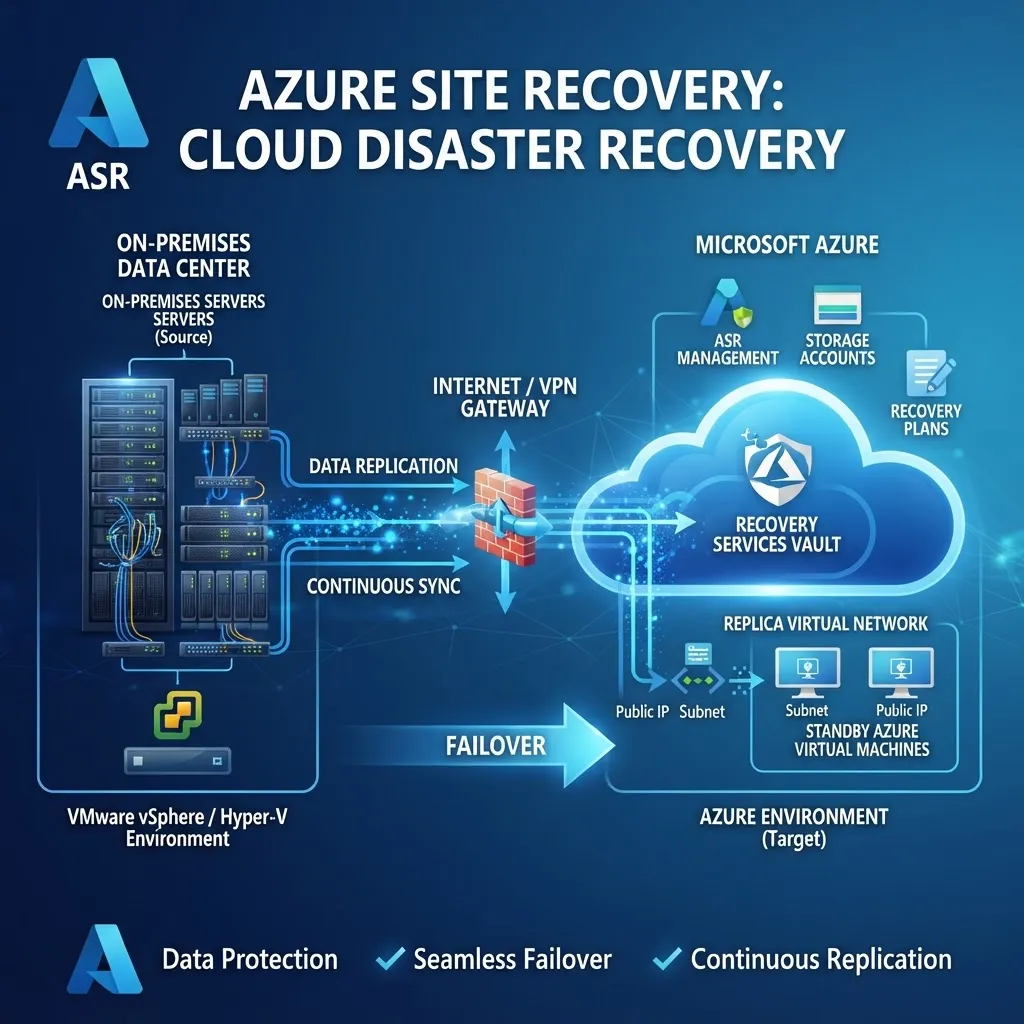
Azure Site Recovery: Zero-Downtime Disaster Recovery for UK Businesses
How Azure Site Recovery delivers automated, tested disaster recovery with recovery times under 2 hours — and why every UK business with on-premises servers should implement it before disaster strikes.

IT Budget Planning: A Complete Guide for UK SMEs in 2026
How to plan, forecast, and optimise your IT budget for 2026 — with real cost benchmarks for managed support, cloud infrastructure, cybersecurity, and Microsoft 365 licensing for UK small businesses.

How to Choose the Right Cloud Provider in 2026
Azure, AWS, or Google Cloud? We break down the decision framework we use with London SMEs to pick the platform that fits their growth.



Sources & further reading
Independent guidance from UK regulators, standards bodies and technology vendors that underpins the advice on this page.
- Microsoft LearnAzure documentationReference documentation for the Microsoft cloud platform.(opens in a new tab)
- Microsoft LearnAzure Well-Architected FrameworkMicrosoft's guidance for building reliable, secure and cost-efficient cloud workloads.(opens in a new tab)
- National Cyber Security CentreCloud security guidancePrinciples for selecting, configuring and operating cloud services securely.(opens in a new tab)
- National Cyber Security CentreCyber Essentials: overviewThe government-backed certification scheme often required in UK contracts and tenders.(opens in a new tab)
Book your free consultation
in 30 seconds.
No obligation. No spam. Just a certified engineer with a clear, proactive roadmap.