
Cloud Transformation Strategy for a London Law Firm

60% reduction in infrastructure maintenance costs. We delivered this outcome for Central London Legal Practice (85 users) by combining VMware, Azure, PowerShell Scripting into a single strategic engagement.
What Central London Legal Practice was facing
A central London law firm was running an aging VMware environment on hardware approaching end of life. They needed a strategic roadmap to modernise their infrastructure, reduce maintenance costs, and meet increasing compliance requirements from their clients — but lacked the in-house expertise to evaluate options and make confident technology decisions. They engaged us to assess their estate and design a transformation strategy that wouldn't disrupt business hours.
How we solved it
We began with a full infrastructure assessment and cloud readiness audit, then delivered a phased transformation roadmap prioritised by risk and ROI. Our strategy used Azure Site Recovery for zero-downtime replication, with PowerShell automation for assessment and scheduling. We designed a hybrid configuration to maintain connectivity during transition, and architected a comprehensive Azure Backup and Site Recovery framework to replace the firm's aging tape backup system. Throughout, we advised the firm's leadership team on compliance, cost modelling, and risk mitigation.
What we delivered
The Challenge: End-of-Life Infrastructure in a Regulated Environment
A central London law firm with 85 users was running a VMware vSphere environment on three physical hosts that were approaching end of life. The hardware was 6 years old, out of manufacturer warranty, and the maintenance contract with the hardware vendor had expired — meaning any hardware failure would require emergency parts procurement at premium rates, with no guaranteed response time. For a law firm where billable hours depended on system availability, this was an unacceptable risk.
The firm's compliance officer had also flagged several issues: the tape backup system had not been tested in over a year, the disaster recovery plan was a document that no one had ever rehearsed, and the firm's clients — particularly corporate clients with stringent vendor risk assessment requirements — were increasingly demanding evidence of robust IT security and business continuity controls. The firm needed a strategic partner who could assess their estate, design a modernisation roadmap, and execute it without disrupting billable work or compromising client confidentiality.
The firm engaged us to conduct a full infrastructure assessment and deliver a transformation strategy. Our assessment identified three priorities: modernise the infrastructure to reduce maintenance costs and improve reliability, implement a tested disaster recovery capability with a documented recovery time objective, and improve the firm's compliance posture to meet increasing client demands. The firm's partners approved the strategy, and we began the 12-week transformation project.
The Strategy: Hybrid Cloud with Azure Site Recovery
We designed a hybrid cloud strategy that used Azure as the disaster recovery target during transition and as the primary infrastructure target post-migration. The strategy had three phases: stabilise the existing environment, establish Azure Site Recovery for zero-downtime replication, and migrate workloads to Azure in phased waves. This approach minimised risk by ensuring that every workload had a tested recovery path before it was migrated, and it allowed the firm to maintain operations throughout the 12-week project.
Phase 1 was stabilisation. We updated the VMware tools, patched the vSphere hosts, and addressed several configuration issues that had been causing intermittent performance problems. We also implemented a temporary Veeam backup repository to provide immediate backup protection while the Azure-based backup was being configured. This phase took 2 weeks and was completed entirely outside business hours.
Phase 2 was the Azure Site Recovery setup. We configured Azure Site Recovery to replicate all VMs from the on-premises VMware environment to Azure, with replication policies tuned to the firm's recovery point objective of 15 minutes. We ran a test failover in an isolated Azure virtual network, verifying that all VMs could boot, all services could start, and all applications were accessible. The test took 45 minutes and was completed without any impact on the production environment. This gave the firm's partners confidence that the disaster recovery capability was real, not theoretical.
Phase 3 was the migration itself. We migrated workloads in four waves over 6 weeks, prioritising by risk and complexity. Wave 1 migrated non-critical systems (test environments, archive servers). Wave 2 migrated the file server and print server. Wave 3 migrated the practice management system. Wave 4 migrated the Exchange server. Each wave was migrated over a weekend, with the firm's staff returning on Monday to find their systems running in Azure — faster, more reliable, and with automatic failover to a secondary Azure region.
PowerShell Automation: Assessment and Scheduling
A key part of the migration strategy was the use of PowerShell automation to assess the environment and schedule migrations. We wrote a suite of PowerShell scripts that connected to the vCenter server, inventoried all VMs, and produced a detailed assessment report including CPU usage, memory usage, disk I/O, network I/O, and storage consumption. This assessment was critical for right-sizing the Azure VMs — ensuring that the firm didn't over-provision (wasting money) or under-provision (causing performance issues).
The assessment revealed that several VMs were significantly over-provisioned. The practice management system server had 32 GB of RAM allocated but was using only 8 GB. The file server had 4 vCPUs but was using less than 1. By right-sizing the Azure VMs based on actual usage, we reduced the firm's Azure compute costs by 35% compared to a like-for-like migration. The assessment also identified two VMs that were no longer used — legacy application servers that had been decommissioned but never turned off — which were decommissioned entirely, saving additional Azure costs.
We also used PowerShell to automate the migration scheduling. The scripts connected to Azure Site Recovery, identified VMs that were ready for migration (replication status healthy, sync complete), and scheduled the migration for the next maintenance window. The scripts also generated pre-migration and post-migration reports, documenting the migration for compliance purposes. This automation reduced the manual effort of each migration from 4 hours to 30 minutes, and ensured that every migration was documented consistently.
Backup and Disaster Recovery: From Tape to Azure
The firm's tape backup system was replaced with a comprehensive Azure-based backup and disaster recovery architecture. We implemented Azure Backup for VM-level protection, with immutable vault and soft-delete for 14 days — meaning backups could not be deleted or modified, even by an attacker with administrative credentials. This was a critical control for a law firm, where client data confidentiality and availability were regulatory requirements under SRA and Lexcel.
We also implemented Azure Site Recovery as the disaster recovery solution, with automated failover to a secondary Azure region. The recovery time objective was 2 hours (the time to fail over and restore service), and the recovery point objective was 15 minutes (the maximum data loss). We tested the failover quarterly, documenting the results for the firm's compliance officer and sharing them with clients who requested evidence of business continuity controls.
The improvement over the tape backup was dramatic. The tape system had a recovery time of 24+ hours (finding the tape, transporting it, loading it, restoring data), and had never been tested. The Azure-based system had a tested recovery time of 2 hours, with automated failover that required no manual intervention. The firm's compliance officer described the change as 'transformative — we went from hoping our backups would work to knowing they would.'
Outcome: 60% Cost Reduction, Zero Downtime, Compliance Passed
The transformation was completed in 12 weeks with zero downtime during business hours. The firm's infrastructure maintenance costs dropped by 60% — from £42,000 per year (hardware maintenance, tape backup, data centre costs) to £16,800 per year (Azure consumption). The firm achieved 99.99% uptime post-migration, with automatic failover to a secondary Azure region providing resilience that the on-premises environment could never match.
The disaster recovery time was reduced from 24 hours to 2 hours — a 92% improvement. The firm's compliance audit, conducted 2 months after the migration, passed with zero findings — the first time the firm had achieved a clean audit. The compliance officer specifically cited the tested disaster recovery capability, the immutable backup, and the documented incident response procedures as significant improvements.
The firm's clients responded positively to the improved compliance posture. Several corporate clients who had previously required the firm to complete detailed vendor risk assessment questionnaires noted the Azure-based infrastructure as evidence of robust controls, and the firm won two new corporate clients who cited the firm's IT security and business continuity capabilities as a factor in their selection. The transformation didn't just reduce costs and improve reliability — it directly contributed to the firm's business growth.
Tools and skills applied
Get results like these for your business
Tell us about your project and a certified consultant will call you back within 10 minutes. No obligation, no pressure.
Questions about this case study
Common questions about the project, timeline, and results.
Related services & insights
The legal services expertise and technical capabilities behind this engagement.
Services

IT & Cloud Infrastructure Migrations
End-to-end IT and cloud infrastructure migration services — from assessment and planning to zero-downtime execution and post-migration optimisation.

Cloud Services & Support
Cloud services and support — architecture design, migration, and ongoing management of Azure, AWS, and hybrid cloud infrastructure.

VMware Virtualization
Reduce hardware costs by 40–70% with VMware virtualization and server consolidation tailored to your business.
Tech Insights

IT Budget Planning: A Complete Guide for UK SMEs in 2026
How to plan, forecast, and optimise your IT budget for 2026 — with real cost benchmarks for managed support, cloud infrastructure, cybersecurity, and Microsoft 365 licensing for UK small businesses.
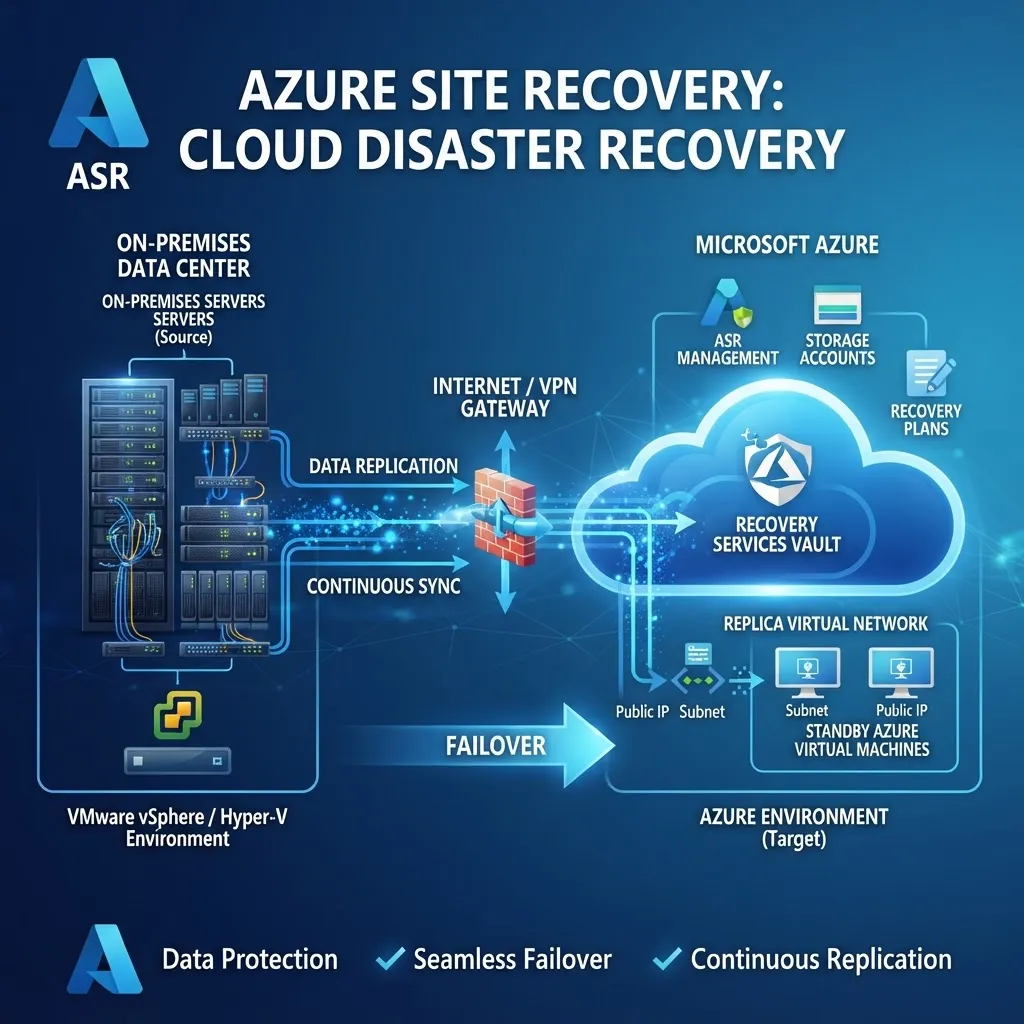
Azure Site Recovery: Zero-Downtime Disaster Recovery for UK Businesses
How Azure Site Recovery delivers automated, tested disaster recovery with recovery times under 2 hours — and why every UK business with on-premises servers should implement it before disaster strikes.

Microsoft 365 Migration: A Step-by-Step Guide for SMEs
Migrating to Microsoft 365 without downtime or data loss. The exact phased approach our engineers follow, from audit to go-live.



Sources & further reading
Independent guidance from UK regulators, standards bodies and technology vendors that underpins the advice on this page.
- Microsoft LearnAzure documentationReference documentation for the Microsoft cloud platform.(opens in a new tab)
- Microsoft LearnAzure Well-Architected FrameworkMicrosoft's guidance for building reliable, secure and cost-efficient cloud workloads.(opens in a new tab)
- National Cyber Security CentreCloud security guidancePrinciples for selecting, configuring and operating cloud services securely.(opens in a new tab)
- VMwareCloud infrastructure and vSphereVirtualisation platform documentation referenced in our infrastructure work.(opens in a new tab)
Book your free consultation
in 30 seconds.
No obligation. No spam. Just a certified engineer with a clear, proactive roadmap.